
What Is a Class A Fire? Causes, Extinguishers, and Prevention Explained (2026)
Most people know fires spread fast — but many don’t realise that using the wrong extinguisher on the wrong fire class can make things significantly worse. In this guide, you’ll learn exactly what a Class A fire is, what causes it, how to extinguish it safely, and how to prevent it at home and at work.
Key Takeaways
- Class A fires involve ordinary combustibles — wood, paper, cloth, rubber, and plastics — making them the most common fire type in homes and workplaces.
- Water, foam, and ABC dry chemical extinguishers are the correct agents for Class A fires.
- Using the wrong extinguisher can increase danger rather than reduce it.
- Common causes include electrical faults, open flames, poor housekeeping, and unattended heat sources.
- The PASS method — Pull, Aim, Squeeze, Sweep — is the correct technique for operating any fire extinguisher.
- Regular inspections, smoke alarms, and safe storage are the most effective Class A fire prevention measures.
What Is a Class A Fire?
A Class A fire is a fire involving ordinary combustible materials such as wood, paper, cloth, rubber, and plastics — the materials found in virtually every home, office, and workplace. These fires leave behind ash or embers after burning, which is what distinguishes Class A from other fire categories like flammable liquids or gases.
Class A fires are the most frequently occurring fire type worldwide. According to the UK Home Office, fires in dwellings — the majority involving Class A materials such as furniture and paper — accounted for over 27,000 incidents in England in 2022–23 — Source: UK Home Office Fire Statistics, 2023. Their everyday frequency is precisely why understanding them is a foundational fire safety skill.
For a broader overview of all fire categories, read our guide on types of fire extinguishers.
Why Class A Fire Awareness Matters
Understanding Class A fires matters because an incorrect response can turn a manageable incident into a major one. A CO2 extinguisher, for example, may knock back visible flames on a Class A fire — but it provides no cooling, so the burning wood or fabric reignites within minutes once the gas disperses.
Additionally, workplace fire safety law requires it. The UK Regulatory Reform (Fire Safety) Order 2005 obliges employers to identify fire types and provide appropriate extinguishing equipment — Source: UK Government, 2005. Installing only CO2 units in a paper-heavy office does not meet that obligation. For guidance on common workplace fire hazards, a formal fire risk assessment is the recommended first step.
What Causes Class A Fires?
Class A fires are caused by heat sources coming into contact with ordinary combustible materials. The most common causes include:
- Electrical faults — overloaded sockets, faulty wiring, or ageing appliances near paper or fabric
- Open flames — candles, lighters, or portable heaters positioned too close to curtains or furniture
- Poor housekeeping — accumulated cardboard, paper waste, or packaging near ignition sources
- Smoking materials — improperly discarded cigarettes that retain heat for up to 20 minutes
- Unattended cooking — an oven or hob scorching wooden surfaces or nearby fabric
For example, a faulty extension lead running under a carpet near a paper storage area can generate enough heat to ignite without producing any visible spark. For electrical fire prevention tips that reduce this specific risk, regular PAT testing and proper cable management are the primary controls.
Common Examples of Class A Fires
Class A fires appear in a wide range of everyday settings. Recognising them in real scenarios helps you respond faster and more accurately.
- An office waste bin where a smouldering match ignites paper, which spreads to wooden furniture
- A warehouse where cardboard packaging catches from a spark near a faulty light fitting
- A residential living room where a knocked candle ignites a wooden coffee table, then the sofa
- A construction site where timber offcuts left near a portable heater catch and spread rapidly
All of these scenarios share the same characteristics: solid fuel, ash residue, and effective suppression with water-based agents.
Which Fire Extinguishers Should You Use on a Class A Fire?
Class A fires are commonly extinguished using water, foam, or ABC dry chemical fire extinguishers, each of which works through a different suppression mechanism.
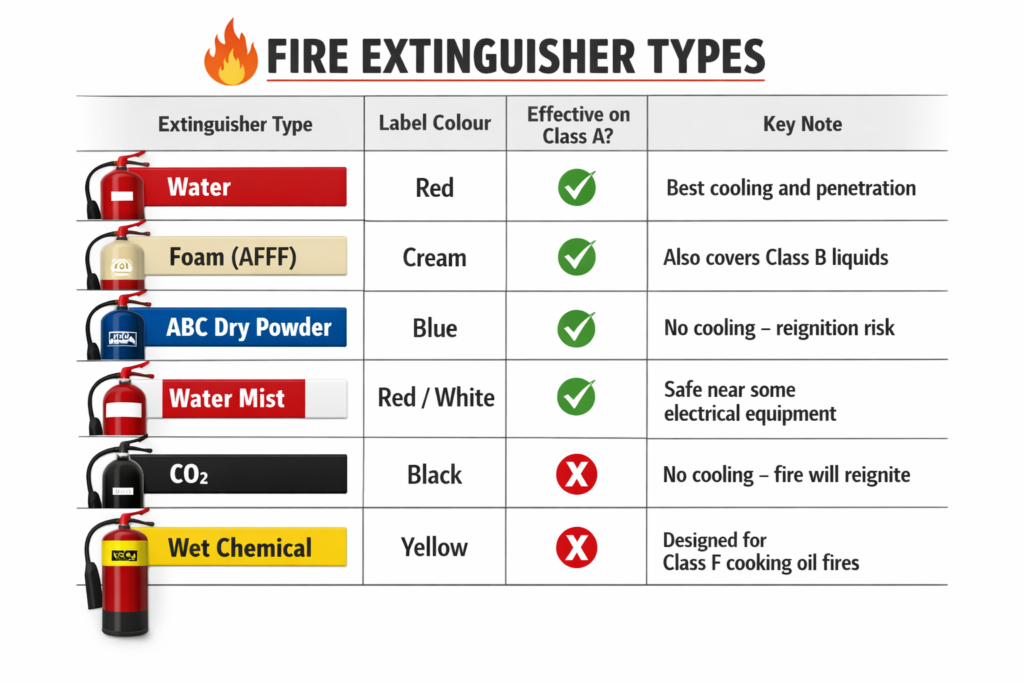
Water is the most effective choice because it cools burning material below its ignition temperature and penetrates porous materials like wood and fabric to prevent internal smouldering. ABC powder suppresses the flame but leaves the material hot — meaning reignition is a real risk if the area is not monitored. For a full comparison, read our guide on ABC fire extinguisher explained.
How to Extinguish a Class A Fire — The PASS Method
The PASS method is the universally recognised four-step technique for safely operating a fire extinguisher. Before using it, confirm the alarm is activated, emergency services are called, and you have a clear exit route behind you. If the fire has spread beyond a single item, evacuate immediately — do not attempt to fight it.
- Pull — Pull the safety pin to break the tamper seal and unlock the handle.
- Aim — Aim the nozzle low at the base of the fire, not the flames. The base is the fuel source.
- Squeeze — Squeeze the handle firmly to release the agent. You can pause and reposition by releasing it.
- Sweep — Sweep the nozzle side to side across the base of the fire until it is fully extinguished.
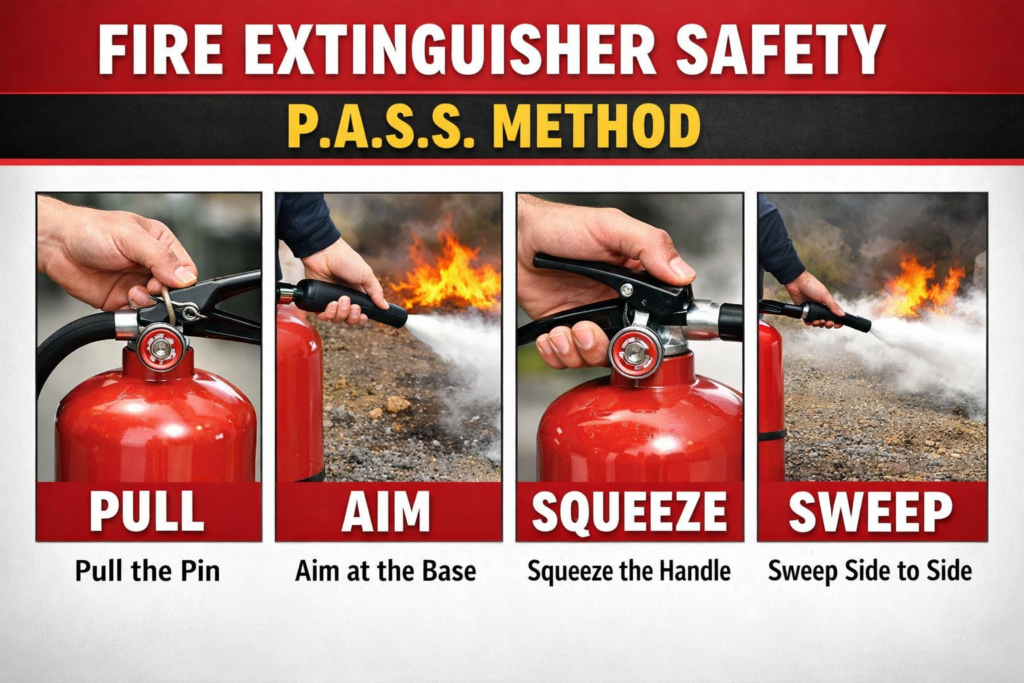
After discharge, watch the area for at least one minute for signs of reignition, especially in materials like wood or upholstery that can smoulder internally. For a full step-by-step tutorial, read our guide on how to use a fire extinguisher.
How to Prevent Class A Fires at Home and Work
Class A fires are largely preventable through consistent housekeeping, safe storage, and routine inspections. The following practices address the most common ignition scenarios:
- Store combustibles safely — keep paper, cardboard, and fabric away from heat sources and electrical panels, with defined maximum storage quantities
- Remove waste regularly — daily disposal of paper and packaging prevents unnecessary fuel accumulation
- Maintain electrical systems — schedule PAT testing, avoid overloaded sockets, and keep cables clear of carpets and insulating materials
- Enforce smoking rules — restrict smoking to designated outdoor areas with proper disposal bins
- Inspect and test — check extinguishers monthly, service them annually, and test smoke alarms every month
According to the Health and Safety Executive, poor housekeeping is a contributing factor in a significant proportion of workplace fire investigations — Source: HSE, 2022. For a complete workplace fire safety checklist, consult your premises fire risk assessment documentation.
Conclusion
A Class A fire involves ordinary combustible materials — wood, paper, cloth, rubber, and plastic — and is the most common fire type you are likely to encounter. The correct response is a water, foam, or ABC dry powder extinguisher applied using the PASS method, always aimed at the base of the fire.
Prevention is even simpler: store combustibles responsibly, maintain good housekeeping, check your electrical equipment, and keep your smoke alarms and extinguishers in working order. Take five minutes today to check your nearest extinguisher’s service label and test your smoke alarm. That one action, done now, is what real fire preparedness looks like.
Written by: [SHANKAR PAREKAR], Fire Safety Specialist — [Brief expertise of 27 years of experience in commercial fire risk assessment and fire safety compliance across industrial and commercial sectors.]
Reviewed by: [SHIV DASS] ,[ BAFE-registered fire safety engineer and certified fire risk assessor with expertise in BS 5306 compliance and industrial fire suppression systems.]
Disclaimer: This article was initially drafted using AI assistance. It has undergone thorough revisions and factchecking by human editors and subject matter experts to ensure accuracy.